
on
Topstep, one of the longest-standing futures prop firms, is implementing a significant change to its cost structure this weekend. Beginning April 12, 2026, the firm will start charging commissions on every trade across its Trading Combine, Express Funded Account (XFA), and Live Funded Account on the TopstepX platform.This marks the end of TopstepX’s previously commission-free environment, where traders only paid exchange and NFA/regulatory fees. The move aligns simulated trading more closely with real-market conditions and comes just days after Topstep’s April 1 acquisition of The Futures Desk, a brokerage and tech-focused firm.
New Topstep Commission Breakdown
Commissions are charged per side (entry and exit), with a full round-turn (RT) being double. They are automatically deducted from your account balance and reflected in your Net PL and dashboard—no separate out-of-pocket payments required.
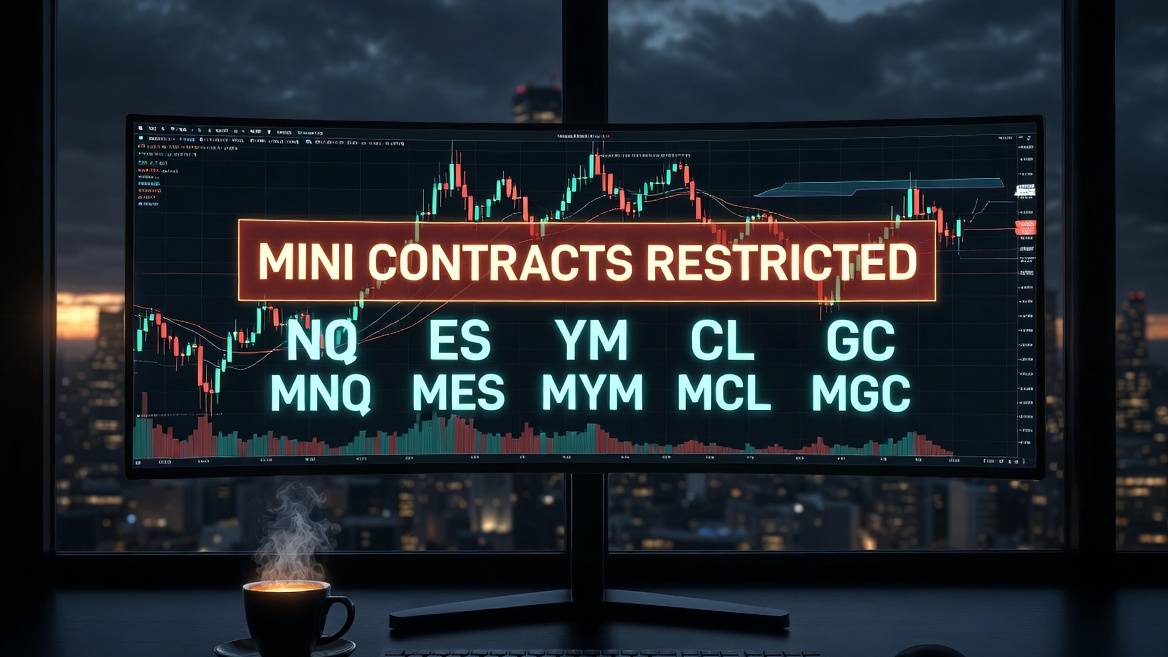
- E-minis (ES, NQ, YM, etc.): $0.50 per side → $1.00 RT commission
- Micros (MES, MNQ, MYM, etc.): $0.25 per side → $0.50 RT commission
These sit on top of existing:
- Product-specific exchange fees
- NFA/regulatory fees (approximately $0.04 RT in many examples)
Sample Total Round-Turn Costs (commission + exchange + NFA, per Topstep’s published breakdowns):
| Product | Exchange Fee (approx.) | Commission (RT) | Total RT Fee |
|---|---|---|---|
| ES (E-mini S&P 500) | $2.76 | $1.00 | $3.80 |
| MES (Micro E-mini S&P 500) | $0.70 | $0.50 | $1.24 |
| NQ (E-mini NASDAQ 100) | $2.76 | $1.00 | $3.80 |
| MNQ (Micro E-mini NASDAQ 100) | $0.70 | $0.50 | $1.24 |
| CL (Crude Oil) – Example | Varies | $1.00 | ~$4.04 |
Full product-specific tables are available in Topstep’s help center. High-volume micro scalpers will notice the impact most, while mini traders may see it as more aligned with live brokerage costs.
Why Now? Context from Topstep’s 2026 Moves
Topstep frames the change as bringing greater realism to its simulated environment, especially as it integrates technology from its recent acquisition of The Futures Desk (announced April 1, 2026). The deal aims to enhance TopstepX with better tools, coaching, and an eventual push toward its own brokerage capabilities.
This commission update is part of a broader tightening and professionalization at Topstep in 2026:
- Profit split: 90/10 for accounts joining after mid-January.
- Payout paths (introduced February): Standard (5 winning days of $150+) vs. new Consistency Path (3 days with 40% consistency target, higher cap up to $6,000).
- Live Funded transition: Starts at only 20% of account size tradable, with gradual scaling and stricter balance maintenance rules for future payouts.
- Pricing options: Standard path ($49–$149/month + activation fee) or No Activation Fee path (higher monthly subscription but $0 when funded).
Traders have noted these layered changes—some appreciate the added realism and tools, while others see them as incremental cost increases and rule complexity in an already competitive space.How Topstep Stacks Up on Commissions (Micro RT Examples)In the futures prop world, commissions remain a key differentiator for active traders:
- TPT: ~$0.50 (currently the lowest on micros)
- Lucid Trading: ~$1.00
- Apex Trader Funding: ~$1.04
- Topstep (new): $1.24
- Tradeify: ~$1.82
- My Funded Futures (MFFU): ~$1.90
- FundedNext: ~$1.90
Topstep lands in the middle of the pack post-change—more expensive than some leaner competitors on pure execution cost, but offset by its institutional clearing relationships, established reputation, and features like daily/rapid payout eligibility on the Consistency Path.Other firms (e.g., Tradeify and MFFU) emphasize $0 activation fees and more flexible funded-stage rules, while Apex has reworked its structure multiple times in 2026 with intraday options.
Trader Reactions So Far
Early chatter on X and forums is mixed but largely pragmatic:Some high-volume micros traders are recalculating edge: “$1.24 RT on MNQ/MES adds up on scalps.”
Others view it as standard: “If it’s industry-realistic, no big deal—better than loose sim that doesn’t prepare you for live.”
A few express fatigue with the pace of 2026 updates: pricing tweaks, payout rule shifts, platform lock-in to TopstepX, and now commissions.
Overall, the consensus seems to be “trust but verify” — Topstep still pays out reliably for many, but the firm is clearly moving away from its earlier “simpler” positioning.
Bottom Line for Prop Futures Traders in 2026
Topstep’s commission introduction isn’t revolutionary on its own, but it signals the ongoing maturation (and consolidation) of the futures prop space. Cheap challenges and zero-friction sims are fading; firms are prioritizing sustainable models, real risk simulation, tech ownership, and compliance.If you trade high volume on micros, the new $1.24 RT may push you to compare total all-in costs (including monthly subscriptions, activation options, and payout speed) against Apex, Tradeify, My Funded Futures, or Lucid.
If you value Topstep’s ecosystem—educational resources, established clearing, and the new Consistency payout path—the added realism could be worth it, especially with the No Activation Fee option for fast passers.Actionable Tip: Check your typical trade frequency and contract mix against the full fee table on Topstep’s site before April 12. Run the numbers on a sample week of your strategy to see the real impact.
The prop futures world in 2026 rewards due diligence more than ever. Topstep remains a major player, but the bar for “best fit” is rising firm-by-firm.What are your thoughts on the change? Drop a comment or reach out if you want a deeper comparison on specific account sizes or strategies.